An emergency binder holds two things. The plan your family would follow in a fire, a storm or a long outage, and what your family would need to find and decide if something happened to you.
Keep it to short, current lists. Write where things are kept rather than full numbers, and keep the binder in a fireproof box or a spot you can reach quickly, with two people who know where it is.
What goes in
- Your household, your contacts and the people who depend on you.
- One medical block per person, children included.
- Your fire escape plan, meeting spots and one-page plan.
- An important papers checklist that says where each original and copy is kept.
- Money accounts, bills, insurance policies and how the house runs.
- A short first-calls page for whoever opens it if something has happened to you.
What stays out
- Full Social Security, passport or account numbers. Write the place a paper is kept, not the number.
- Passwords, if you use a password manager. Write which one you use and how a trusted person can reach it.
- Door and alarm codes. Write where the code is kept, never the code.
Free pages to print
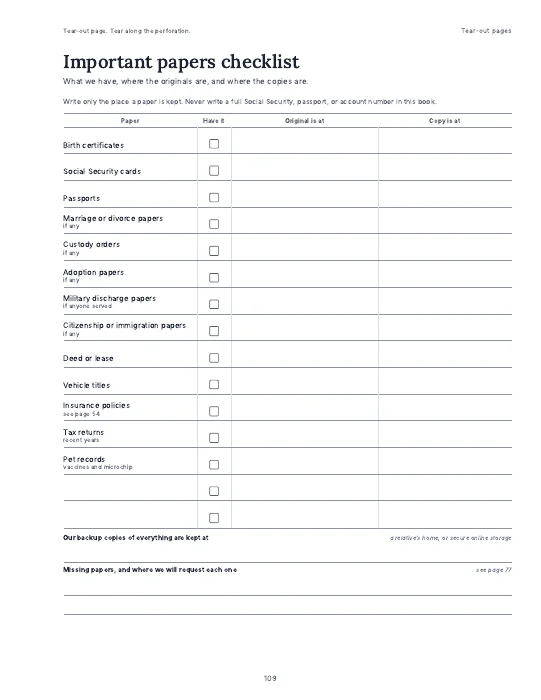
Important papers checklist
A blank single page you can print and fill in by hand.
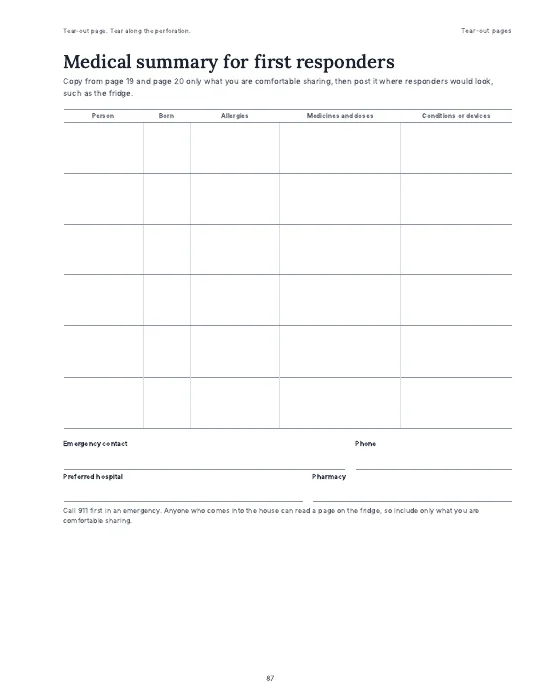
Medical summary for first responders
A blank single page you can print and fill in by hand.
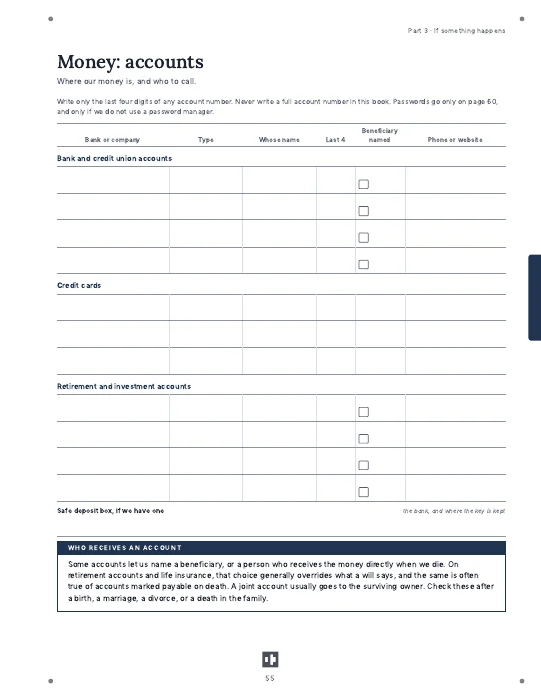
Money accounts page
Two pages for accounts, income, benefits and debts.
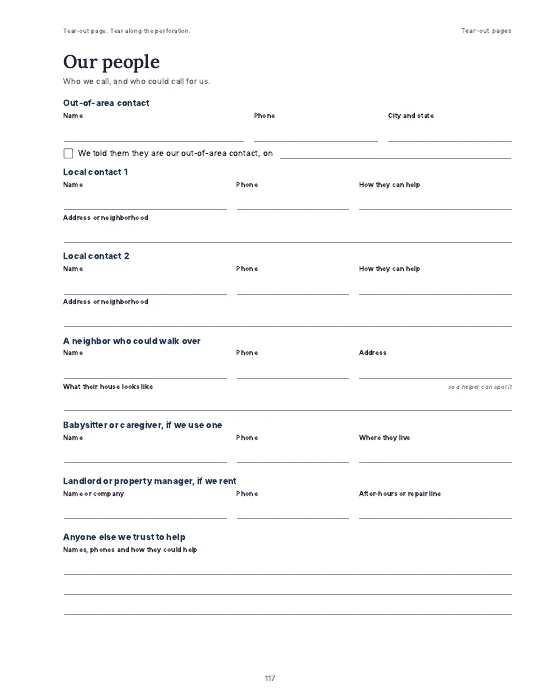
Our people
A blank single page you can print and fill in by hand.
General information for families, not legal, medical or financial advice. In an emergency, follow local officials and call 911.
Related questions
All planning answersPrinting page by page?
Get all 120 pages bound, tabbed and lying flat in the official book for $39 with free US shipping.
- Lies flat while you write
- The Smith family's example faces every fill-in page
- Arrives in time for Christmas
- 14-day money-back guarantee