Go to a basement, or a windowless interior room on the lowest floor, away from windows and outside walls. Cover your head and neck, and get under something sturdy if you can.
Tornadoes can form with little warning, so pick the spot now, name a second one in case it is blocked, and practice going there.
Watch and warning
- Watch means tornadoes are possible nearby. Review your plan and be ready to move fast.
- Warning means one has been sighted or shown on radar. Go to shelter right away.
- Take cover if you see a funnel cloud or green sky, or hear a loud roar.
- Turn on Wireless Emergency Alerts on every phone and keep a battery NOAA Weather Radio.
Away from a sturdy home
- Do not stay in a mobile or manufactured home. Go to a sturdy building nearby.
- In a car, do not try to outrun it. Drive to the closest shelter if you can, or stay buckled with your head below the windows.
- Never shelter under an overpass or bridge.
- At school or work, follow the building's drill and avoid large open rooms like gyms.
After
- Stay out of damaged buildings and clear of downed lines.
- If you smell gas, do not use matches, lighters or light switches.
- Text instead of calling, and keep a radio on, since more storms can follow.
Free pages to print
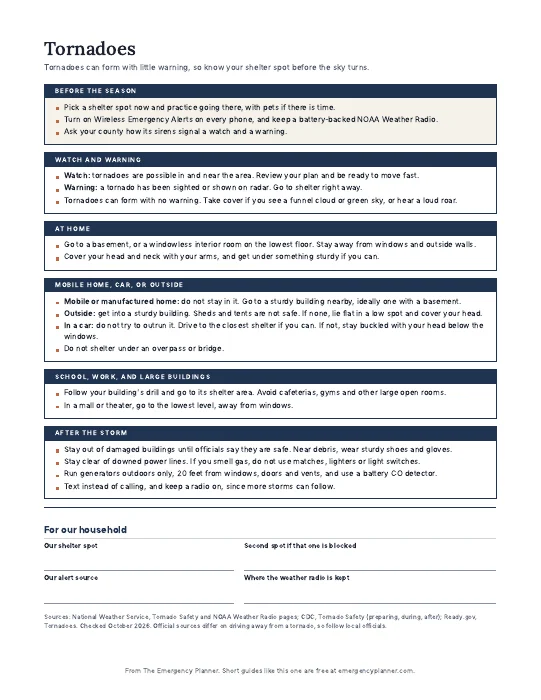
Tornadoes guide
A short guide to where to shelter and what to do after a warning.
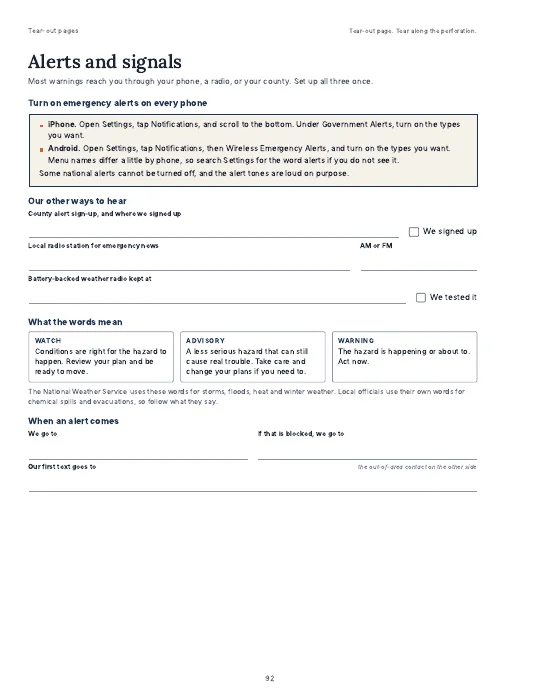
Alerts and signals
A blank single page you can print and fill in by hand.
Sources: National Weather Service, Tornado Safety and NOAA Weather Radio; CDC, Tornado Safety; Ready.gov, Tornadoes. Checked October 2026. Sources differ on driving away, so follow local officials.
General information for families, not legal, medical or financial advice. In an emergency, follow local officials and call 911.
Related questions
All planning answersPrinting page by page?
Get all 120 pages bound, tabbed and lying flat in the official book for $39 with free US shipping.
- Lies flat while you write
- The Smith family's example faces every fill-in page
- Arrives in time for Christmas
- 14-day money-back guarantee