A medical wallet card tells a helper the few things a doctor or paramedic often needs first. Which medicines you take, what you are allergic to, and which conditions or devices you live with, plus who to call.
Copy medicine names and doses straight from the bottles, and update the card after every change.
On the card
- Name and birth date.
- Allergies to medicines, foods, latex or stings. Write "None known" if there are none, so a helper can tell the question was answered.
- Ongoing conditions and devices.
- Medicines and doses, including over-the-counter medicines, vitamins and supplements.
- Where an auto-injector or inhaler is carried, if there is one.
- An emergency contact and phone.
Good habits
- Blood type is optional. Leave it blank if you are not sure, since a blank is more useful than a guess.
- Set up the medical ID on each adult's phone too, sharing only what you are comfortable with on the lock screen.
- Make one for each child who goes to a sitter, a camp or a relative's house.
Free pages to print
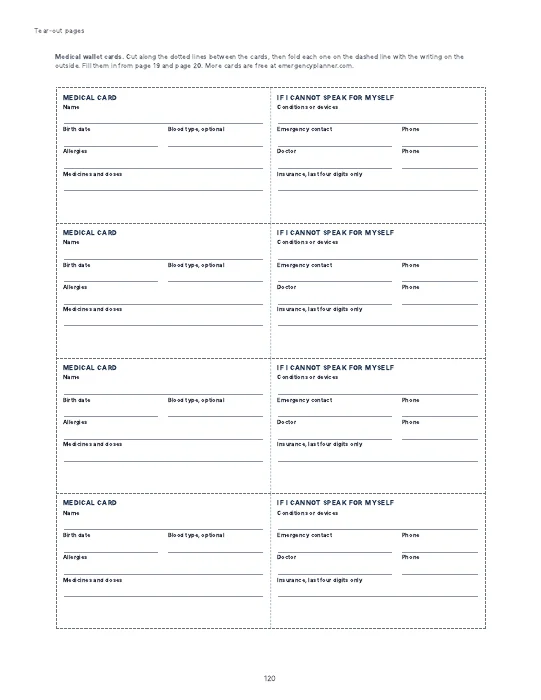
Medical wallet card
Conditions, medicines and allergies for a wallet or bag.
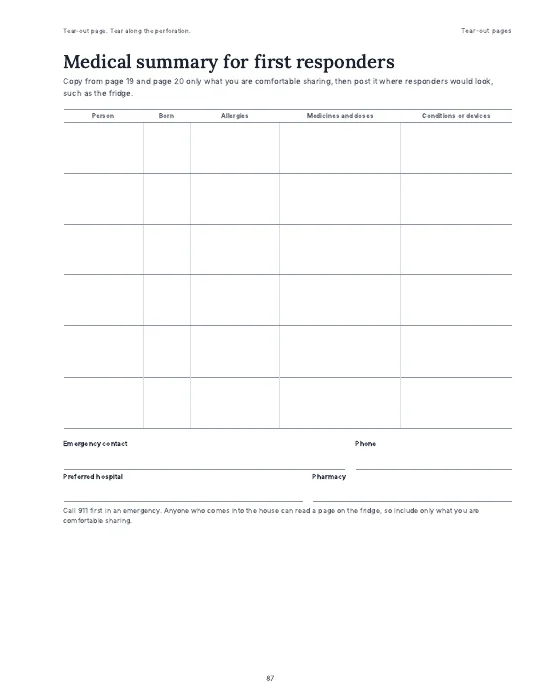
Medical summary for first responders
A blank single page you can print and fill in by hand.
General information for families, not legal, medical or financial advice. In an emergency, follow local officials and call 911.
Related questions
All planning answersPrinting page by page?
Get all 120 pages bound, tabbed and lying flat in the official book for $39 with free US shipping.
- Lies flat while you write
- The Smith family's example faces every fill-in page
- Arrives in time for Christmas
- 14-day money-back guarantee